Laos
|
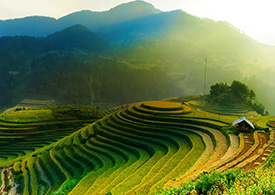
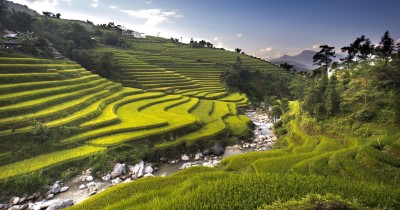
LAOS AT A GLANCE LAOS – SIMPLY BEAUTIFUL The official name of Laos is the Lao People's Democratic Republic, or Lao PDR - but it has been said that the acronym could equally stand for "Lao People Don't Rush!" For many that is the charm and main attraction of Laos. The country moves at a pace as languid as the Mekong River that flows through it. Towns are less hectic than elsewhere in Asia and the countryside is a combination of beauty and tranquility. Like its neighbors in Indochina, Laos spent much of the last half of the 20th Century hidden from the gaze of the outside world. Visitors today encounter a simple society with a strong spiritual tradition where the stresses and strains of the modern world seem irrelevant. Despite increased interest from the outside world Laos still remains the undoubted undiscovered gem of Asia. The landlocked nation of a little over six million people exudes a delightful, almost other-worldly charm and reminds one of a simpler, easier time. Population There are actually a lot of different ethnic minorities groups (69) in Laos but most of them belong to the three main categories: The Lao Loum, the Lao Theung and the Lao Sung. 85% of the population lives in the countryside. The dominant religion is Buddhism (60% of the population). There is a small community of Catholics while the rest of the population is animistic. Language Currency Visa and Master cards are accepted now in most hotels in Vientiane and Luang Prabang, a few restaurants and shops in the main towns (Vientiane, Luang Prabang and Pakse), but can also be subject to 2 to 5% transaction fees. You can also get cash advances with your credit card either from automated teller machines (ATM) in Vientiane BCL Bank or from foreign exchange offices (subject to 2 to 5% transaction fees).
Climate
Local Time Electricity Water Telecommunications For mobile phone users: only a few international operators have an agreement with Lao operators, but you will be able to buy phone cards on the spot. There are quite a lot of Internet shops in most of the big cities in all provinces of Laos, although the Internet connection is often running quite slow. Health & Medical Facilities Vientiane has good hospitals staffed with foreign medical personnel, while in Luang Prabang and Pakse there are only local medical staff. For life threatening injury it is advisable to be evacuated to Bangkok or Singapore and we therefore strongly recommended taking out medical travel insurance. Transportation Road networks have improved but still need to be upgraded in some areas. By car or bus, it takes about 7-8 hours from Vientiane to reach Pakse and 8 hours from Vientiane to Luang Prabang.
Shopping Tipping
GENERAL INFORMATION GEOGRAPHY CLIMATE AND SEASONS (Box of Max, Min temperature, Rain through out the year of Vientiane and Luang Prabang.) PEOPLE LANGUAGE RELIGION FESTIVALS AND HOLIDAYS
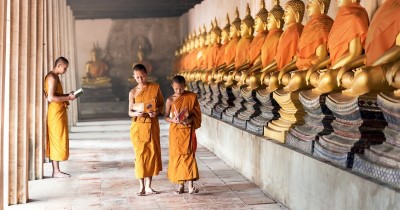
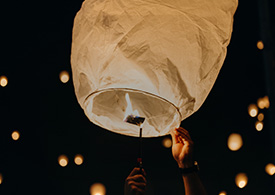
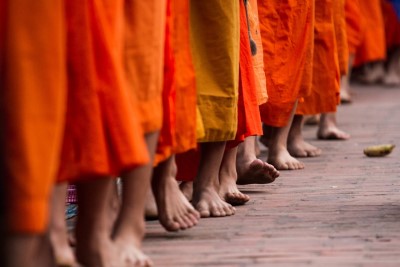
• January - Bun Pha Wet. Falling on different dates throughout the month the festival commemorates the Jataka, the life story of Lord Buddha as Prince Vestsantara. The story is recited in temples throughout the country and this is considered a particularly auspicious time for ordination as a monk. • February - Magha Puja - Held on the night of the full moon to commemorate the original teachings of Lord Buddha given to over a thousand monks who came spontaneously to hear him speak. The festival is marked by grand parades of candle-bearing worshippers circling their local temples and much religious music and chanting. - Vietnamese Tet & Chinese New Year - Celebrated in Vientiane, Pakse and Savannakhet by the Vietnamese and Chinese communities who close their businesses for several days during this period. • March - Boun Khoun Khao - A harvest festival celebrated at local temples • April - Boun Pimai - This is the celebration of the Lao New Year and is a combination of merriment and meditation. Similar to other festivals at this time, in particular Thailand, Boun Pimai is celebrated with parades, dancing, singing and enthusiastic water-throwing. At Luang Prabang water pouring ceremonies are performed on Buddha statues. Temple compounds are further decorated with small sand Stupas, offered to bring good fortune and health. • May - Labor Day 1st May - public holiday. Boun Bang Fai (rocket festival) - With its origins in pre-Buddhist rain-invoking ceremonies, this festival now coincides with the Lao Visakha Puja celebrations. Parades, songs and dances all lead to an explosive climax as huge, ornate, homemade bamboo rockets are blessed and fired into the skies to invite the rains. • June/July - Children's Day (1st June - public holiday). Khao Phansaa - Marking the beginning of the three-month Buddhist Lent, which commences at the full moon in July and continues until the full moon in October. • August - Haw Khao Padap Din - Devoted to remembering and paying respect to the dead, it is marked by the macabre ceremony of exhuming previously buried bodies, cleaning the remains and then cremating them on the night of the full moon. Relatives then present gifts to the monks who have chanted on behalf of those who have passed away. • October - Awk Phansaa (Awk Watsa) - Marking the end of Buddhist Lent on the day of the full moon. Monks are at last permitted to leave the temple and are presented with gifts. Bun Nam (water festival) - In riverside towns such as Vientiane, Luang Prabang and Savannakhet, the highly competitive Bun Nam boat races (suang heua) are held during the same time as Awk Phansaa. • November - Boun That Luang - Though celebrated at many temples around the country this festival is traditionally centered at That Luang in Vientiane. Fairs, beauty contests, music and fireworks take place throughout the week of the full moon and end with a candlelight procession (wien thien) around the temple of That Luang. • December - Lao National Day (2nd December - public holiday) - Streets strewn with national flags and banners, processions, parades, and speeches are the highlights of this celebration for the victory of the proletariat in 1975. LAOS TIME GMT plus 7 hours HANDICRAFTS AND SOUVENIRS Laos has a strong tradition of cotton and silk weaving. In fact, several renowned European designers have recently started coming to Laos to purchase elaborate weavings. The weavings display a level of skill and artistry not seen anywhere else in the world. Artists from each province incorporate distinctive colors and patterns into their work. Such pieces can be bought in all the major markets, or directly from makers in silk weaving villages in Luang Prabang. |